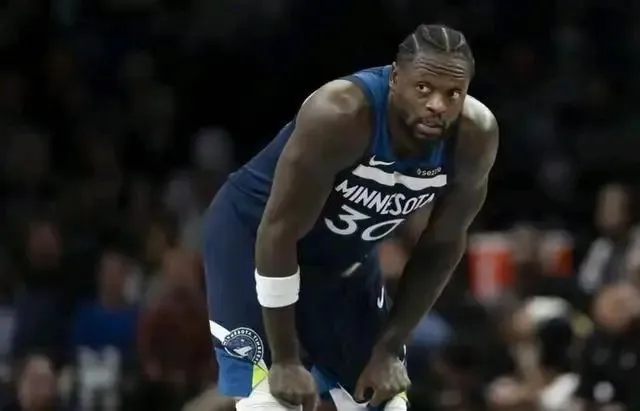
The scoreboard at FedExForum ultimately froze at 110–116, as the Minnesota Timberwolves fell short in a hard-fought battle. For the Timberwolves, the reasons behind this loss were multifaceted, but one unavoidable focal point was the performance of the team’s new addition, Julius Randle. In 35 minutes of action, he produced a stat line that looked acceptable on the surface—21 points, 5 rebounds, 3 assists, and 3 steals. Yet behind those numbers lay a complete loss of efficiency and rhythm, an ice-and-fire performance that defined the Memphis night.
The opening act of the game was written in “ice.” In the first quarter, when the Timberwolves desperately needed a core player to step up and stabilize the team, Randle instead found himself trapped in a deep shooting slump. He received plenty of opportunities on the offensive end, but the ball simply refused to fall. Ten shot attempts resulted in only two made field goals. This extremely low efficiency was like a bucket of cold water poured over the team’s early momentum. Each missed shot seemed to shake his teammates’ confidence and further solidify the Grizzlies’ defensive resolve. In basketball, a star player’s slow start can be even more damaging than an opponent’s hot opening, because it erodes the offense from within. Randle’s first quarter was a textbook example of that negative effect.
As the game progressed, Randle tried to fight his way out of the slump, and his performance began to show a “fire” side. He moved away from inefficient mid-range jumpers and instead used his strength to attack the paint and draw contact. Over the course of the game, he earned four free-throw attempts and recorded three steals on defense, showcasing the effort and versatility expected from an all-around forward. In the end, he scored 21 points on 21 shot attempts. From a purely numerical standpoint, he carried scoring responsibility, but those points came at a heavy cost: 9-for-21 shooting from the field and just 1-for-6 from three-point range. This “high-volume, low-return” offensive approach essentially traded heavy ball usage for inefficient scoring.
This blend of ice and fire reflects a deeper issue in Randle’s integration into the Timberwolves’ system. Minnesota is a team built around Anthony Edwards as the unquestioned centerpiece, with Rudy Gobert anchoring an interior-focused defensive framework. Randle was brought in to serve as a secondary star—someone who could provide consistent scoring and playmaking. However, in this game, his personal offensive rhythm often clashed with the team’s overall flow. When he isolated on the perimeter, the offense frequently stagnated, turning other players into spectators. He could not tear apart the defense with explosive scoring the way Edwards can, nor did he establish an efficient inside-out connection with Gobert. His three assists, when viewed against his shot volume, were negligible, highlighting his limited impact as a facilitator.
Ultimately, Randle became a walking contradiction in this contest. He scored, he defended, and his box score was not empty—but his inefficiency quietly dragged down the team’s offensive effectiveness. The six-point loss cannot be placed entirely on his shoulders, but as a key piece of the roster, his struggles were undeniably one of the decisive factors. This performance in Memphis represents a growing pain in Randle’s adjustment to a new team. How to balance individual offense with team tactics, and how to coexist more effectively alongside Edwards and Gobert, are questions that both Randle and the Timberwolves’ coaching staff must answer quickly. Otherwise, this seemingly respectable 21-point outing will continue to linger as a hidden ache on the road to victory.